
The Neuroscience of Play: Why Play Isn’t Just “Fun” — It’s Foundational
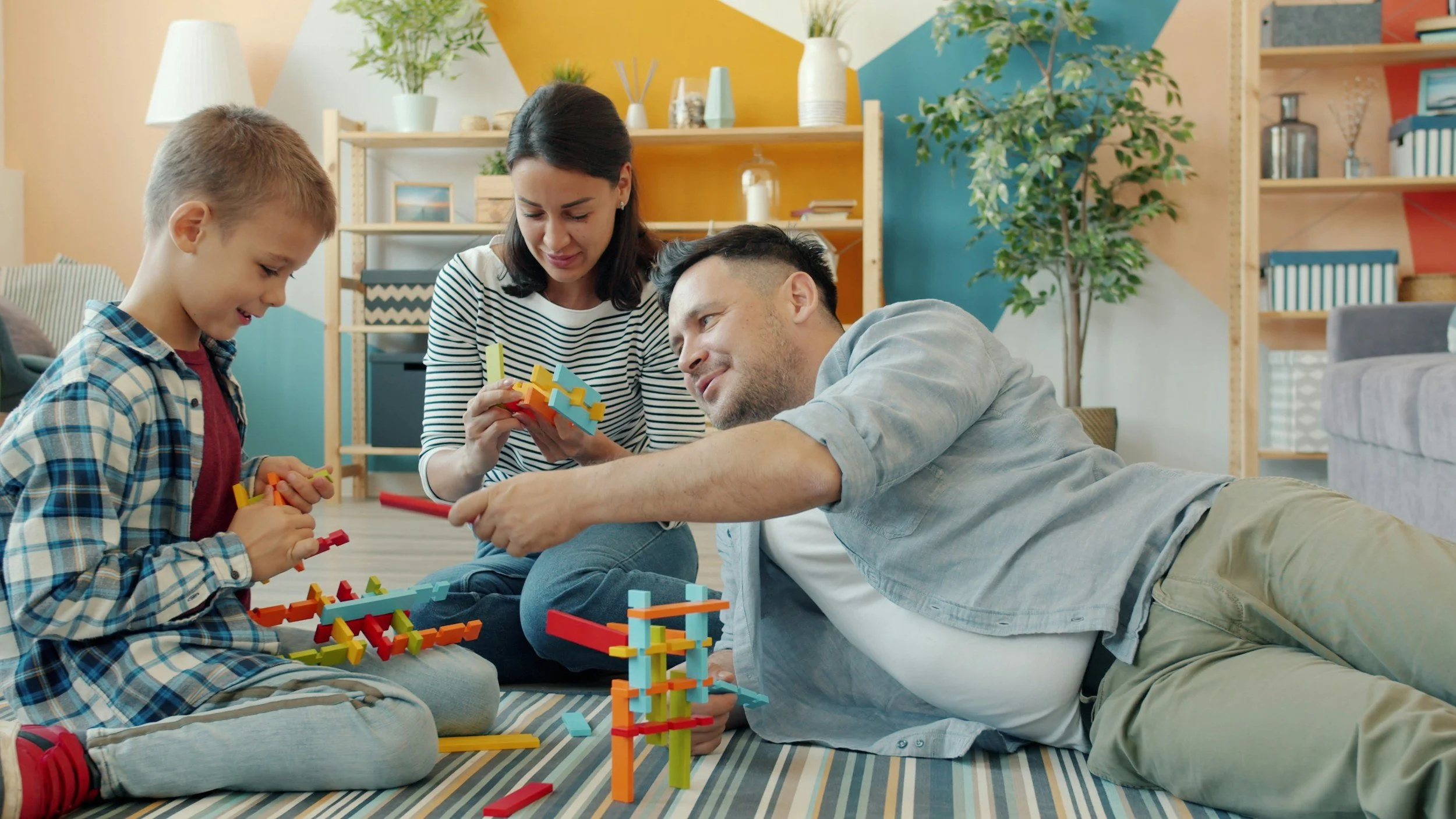
Mom, dad, and child playing together with building toys, fostering connection and learning through play
If you’ve heard that play is important for kids but want to understand why—the science behind it—this is the blog post for you.
As parents, we often think of play as a bonus—something nice to do after homework, chores, and the “real” work of the day is finished.
But neuroscience tells us something very different: play is the real work of childhood.
When you get down on the floor, make up silly voices, wrestle on the carpet, or let your child boss you around in an imaginary game, you’re not just passing time—you’re actively helping to build your child’s brain.
Yes, literally building it.
How Play Builds the Brain
In the early years, a child’s brain is growing at a breathtaking pace—forming over one million new neural connections every second (Harvard Center on the Developing Child, 2020). Think of it like rapid-fire construction: roads are being laid, bridges are being built, and detours are being tested.
Play is one of the main ways those connections get strengthened and organized. During imaginative, physical, and social play, the brain lights up in areas responsible for executive functioning (focus, planning, impulse control), emotional regulation, and memory and learning.
That backyard superhero chase, the pillow fight, or the chaotic living-room obstacle course isn’t just noise—it’s brain development in action.
Rough-and-tumble play, in particular, boosts levels of BDNF (brain-derived neurotrophic factor), a protein that supports brain plasticity and memory (Pellis & Pellis, 2013). In plain language, movement plus play helps the brain learn and adapt.
Even pretend play—the kind that can look silly or unproductive—activates the prefrontal cortex, the part of the brain involved in empathy, problem-solving, and emotional control (Russ & Wallace, 2013).
This is the same area children rely on later to cooperate, manage stress, and navigate relationships.
So yes, letting your child pretend to be a dragon for the 47th time today is doing far more than it appears!
The Chemistry of Connection: Why Play Helps Kids Feel Safe
Play doesn’t just shape the brain—it strengthens your bond. When you laugh together, make eye contact, cuddle, or share playful moments, your bodies release oxytocin, often called the connection hormone.
Oxytocin lowers stress, builds trust, and supports secure attachment. It also helps protect against anxiety and depression later in life.
In a 2020 study, even hospitalized children showed decreased cortisol (the stress hormone) and increased oxytocin after just a few minutes of play-based storytelling with a caregiver (Aznar et al., 2020).
If play can help calm a child in a hospital bed, imagine what it can do on a tough Tuesday afternoon at home—when everyone’s tired, hungry, and one spilled cup of milk away from losing it.
Play as Co-Regulation: Borrowing Your Calm
From a therapeutic perspective, play is a powerful form of co-regulation. When children are overwhelmed—melting down, shutting down, or acting out—they don’t yet have the brain wiring to calm themselves.
They borrow yours.
Your steady voice, playful tone, and regulated nervous system act like an emotional anchor. Dr. Dan Siegel’s concept of the Window of Tolerance helps explain this: children learn and connect best when they feel safe—not too overwhelmed and not shut down.
Play helps keep children in that “just right” zone. Over time, these repeated experiences actually help rewire stress responses and build resilience.
Why Play Is the Language of Children (and the Tool of Therapy)
As a Certified Play Therapist, I see every day how play allows children to express what they don’t yet have words for.
But this power doesn’t belong only in the therapy room—it belongs in your home.
Through games, storytelling, role play, movement, and silliness, children explore big feelings, test ideas, and work through experiences in a way that feels safe and manageable—all while feeling deeply connected to you.
You don’t need to be funny, creative, or perfect. You just need to be present and hold space for these moments.
Three Simple Ways to Use Play to Build Brains
You don’t need hours or expensive toys. Even short moments of intentional play make a difference.
1. The 10-Minute Connection Game
Set a timer, let your child lead the play, and say yes to their ideas as long as they’re safe. Following your child’s lead tells their brain, You matter, and I’m paying attention, which strengthens attachment and emotional regulation.
2. Turn Power Struggles into Play
Use play to soften everyday battles like getting dressed or leaving the house. Instead of “Put your shoes on now,” try, “These shoes must be very sleepy—can you help me wake them up?” Turning a demand into play lowers stress hormones and keeps your child’s brain in a regulated, cooperative state.
3. Use Playful Repair After Hard Moments
After a meltdown, argument, or rough transition, try pressing a playful “rewind button.” You might say, “Whoa—REWIND! Let’s try that again,” and replay the moment using silly voices, exaggerated movements, or a funny character. Turning a hard moment into play helps your child’s nervous system reset, reduces shame, and restores connection. Re-doing moments in a light, playful way teaches the brain that mistakes aren’t dangerous—and that repair is always possible.
What the Science (and the Heart) Agree On
Play supports healthy brain development.
Play strengthens attachment and boosts oxytocin.
Play helps children regulate stress and emotions.
Play is not optional—it’s essential.
So the next time you feel a little silly singing a made-up song, crawling on the floor, or pretending to be a sleepy bear, remember this: you’re not wasting time. You’re building a brain. You’re creating safety. You’re nurturing emotional strength.
And along the way, something else happens. Play softens adults, too. It pulls us out of urgency and into connection, offering moments of laughter, repair, and relief. In choosing play, you’re not only supporting your child’s growth—you’re giving yourself permission to breathe, reconnect, and feel safe in relationship again.
If you’re finding that play feels hard right now—because parenting feels heavy, your child is struggling, or connection feels strained—you don’t have to figure it out alone. Parent support and play-based therapy can offer guidance, relief, and a safe place to rebuild connection at your own pace.
Curious about how play and parent support could help your family? You can book a free consultation here to explore what might work best.
References
Aznar, F. et al. (2020). PNAS: Oxytocin and cortisol changes in hospitalized children
Pellis, S. & Pellis, V. (2013). The Playful Brain
Harvard Center on the Developing Child (2020). Brain architecture and early experiences
Russ, S. & Wallace, C. (2013). Pretend play and creative processes
Siegel, D. (2012). The Whole-Brain Child
American Academy of Pediatrics (2018). The Power of Play