
Praise or Encouragement? How Our Words Help Children Build a Strong Sense of Self
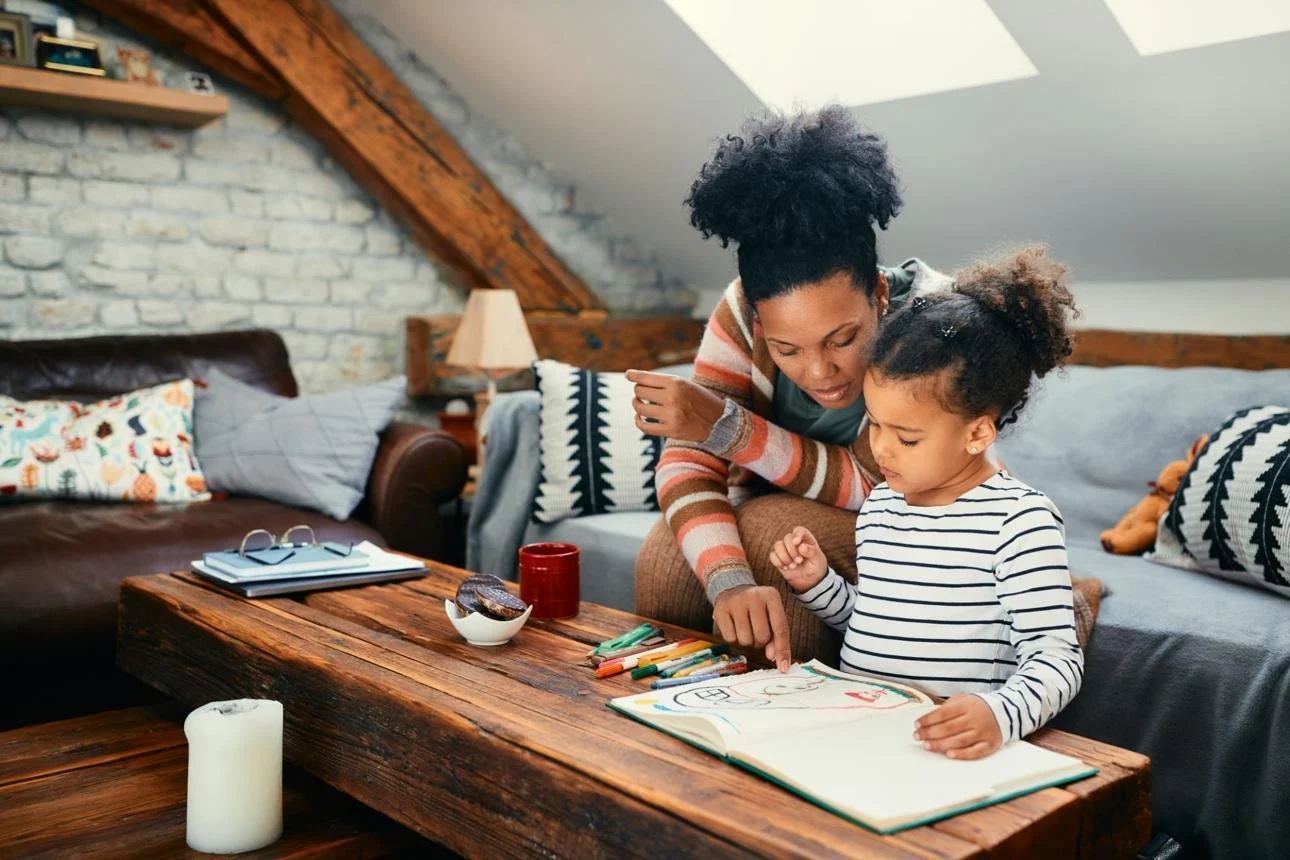
Have you ever stopped to wonder how children come to believe things about themselves? How does a child begin to think, "I'm someone who can solve problems," or "I'm someone who is kind," or "I'm someone who can handle hard things?" Children aren't born with these beliefs. They develop them over time through their experiences and, perhaps most importantly, through their relationships with the people around them. Every day, children are gathering information about themselves.
When they spill their milk, they are learning something about mistakes.
When they struggle to tie their shoes, they are learning something about challenges.
When they disagree with a sibling, they are learning something about relationships.
When they try something new, they are learning something about their own abilities.
And woven through all of those moments are the messages they receive from the adults who matter most. Our words become part of the story children tell themselves about who they are.
When I learned about the difference between praise and encouragement, I knew this was something I wanted to share with parents! At first glance, they can seem almost identical. Both are ways we respond positively to our children. Both come from a place of love. Both are often used with the goal of helping children feel confident and proud. But there is an important difference.
Praise focuses on the evaluation of the adult.
Encouragement focuses on helping the child notice something true about themselves.
Understanding this difference, and taking small intentional steps in how we encourage our children, can have a powerful impact on how they develop confidence, resilience, and a healthy sense of self.
Praise and encouragement both have a place—but they aren't accomplishing the same thing.
Let's start with something important: this isn't about eliminating praise. Our children need to know that we delight in them. They need to see us smile when they're excited, celebrate their accomplishments, cheer them on from the sidelines, and tell them we're proud of them. Those moments of shared joy strengthen our relationship and communicate, "I'm with you, and I love celebrating the things that matter to you."
The difference is that praise and encouragement communicate two different messages.
Praise often reflects our evaluation of what a child has done:
"Good job!"
"That's amazing!"
"You're so smart."
"I'm so proud of you."
Encouragement shifts the focus away from our opinion and toward the child's own experience. Instead of evaluating the outcome, we notice the effort, perseverance, courage, kindness, or problem-solving that got them there.
Imagine your four-year-old insisting on putting on their own shoes before preschool. You're already running late, and after several attempts they're becoming frustrated. They sigh dramatically, pull the shoe off, put it back on the wrong foot, and almost ask for help. Finally, after a few more tries, they get it.
Most of us would naturally say, "Good job!"
But imagine responding with:
"You kept trying, even when it was really frustrating."
Or maybe your child spends half an hour drawing a picture before proudly bringing it over for you to see.
Instead of saying, "That's beautiful!" you might say:
"You worked on that for a long time. I noticed you kept adding little details until it looked just the way you wanted."
Or perhaps your child has been learning to ride a bike without training wheels. They fall. They cry. They tell you they're never riding a bike again. Ten minutes later, they decide to climb back on and try again.
When they finally ride across the driveway, "Good job!" celebrates what they accomplished.
"You kept getting back up, even when it was hard," shines a light on something they demonstrated along the way.
Can you hear the difference?
One focuses primarily on the result. The other helps the child notice the qualities they brought to the experience.
That difference might seem small in these little moments, but a child’s sense of self develops through thousands of simple, ordinary interactions like these!
Every interaction is helping your child answer the question, "Who am I?"
As adults, we can sometimes think of confidence as something children either have or don't have. But confidence develops over time as children make sense of their experiences and the messages they receive from the people around them.
In psychology, we often talk about self-concept—the beliefs we hold about who we are. Before children can say things like, "I'm resilient," or "I'm creative," those beliefs are quietly taking shape beneath the surface.
Think of your child's self-concept like a story that's being written one page at a time. Every experience adds another sentence. Every interaction adds another chapter.
When your child struggles with a puzzle and hears, "You kept trying until you figured it out," they're learning more than how to complete a puzzle. They're gathering evidence that says, "I'm someone who doesn't give up."
When they help a younger sibling and you say, "You noticed your brother needed help," they're beginning to see themselves as someone who cares about other people.
When they're nervous about walking into a birthday party and you later reflect, "That was hard, but you were brave enough to go in anyway," they begin gathering evidence that they can do difficult things even when they feel nervous.
Children don't wake up one morning believing they're resilient, thoughtful, or capable. Those beliefs develop through repeated experiences of themselves acting in those ways. This is one of the reasons encouragement is so powerful. It helps children recognize patterns in themselves.
As a play therapist, I see this happening all the time. A child who initially says, "I can't do it," eventually builds something they didn't think was possible. They solve a problem without an adult stepping in. They recover after making a mistake. They take a risk and discover they can handle it.
Our encouragement helps shine a light on those moments. It gives children language for the strengths they're already developing.
And over time, these repeated experiences can become part of the way children see themselves. Eventually, these messages may become part of their own inner voice. And I think that’s pretty amazing!
Why encouragement matters in child-centred play therapy
Dr. Brenna Hicks, founder of The Kid Counselor and the Play Therapy Parenting Podcast, describes encouragement as one of the four pillars of play therapy, alongside reflecting feelings, choice giving, and limit setting. In Child-Centred Play Therapy, children are given opportunities to make choices, experience themselves as capable, work through challenges, and discover their own strengths within the safety of the therapeutic relationship.
The therapist isn't constantly telling a child what they should do or how they should feel. Instead, the therapist creates space for the child to experience themselves. Encouragement supports that process by helping children notice what they are already doing.
"You figured that out."
"You kept trying."
"You found another way."
"You decided you were ready to try again."
These observations communicate something very different from simply telling a child, "You're smart," or "You're good at this." We're helping them build their own evidence of capability.
If you're interested in learning more about how child-centred play therapy works, you can learn more about my child counselling and play therapy services.
What does encouragement actually sound like?
Once you understand the difference, encouragement can become surprisingly simple.
You don't need to turn every parenting moment into a lesson. Often, the most meaningful encouragement is simply noticing what is already happening. Here are some examples to hopefully get things rolling!
When your child keeps trying
Your child is struggling with a puzzle and keeps trying different pieces.
Instead of: "Good job!"
Try: "You kept trying different pieces until you found one that fit."
Or: "That was frustrating, and you stayed with it."
When your child solves a problem
Your child can't reach something on a high shelf and finds a stool.
Try: "You figured out another way to reach it."
When your child shows courage
Your child is nervous about walking into a new activity or talking to someone they don't know.
Instead of: "Don't be nervous. You'll be fine!"
Try: "You were nervous, and you decided to go in anyway."
You're not trying to convince them that they shouldn't feel afraid. You're helping them notice that they can feel nervous and still move forward.
When your child takes responsibility
Your child spills their drink and begins cleaning it up.
Try: "You noticed what happened and took care of it."
When your child shows kindness
Your child notices their sibling is struggling and offers help.
Try: "You noticed they needed help."
When your child tells the truth
Your child admits they broke something, even though they know they may be in trouble.
Try: "It was hard to tell me what happened, and you told me the truth anyway."
**And please know these aren't scripts you have to follow word-for-word. We all have different learning styles—some people appreciate having specific words to try, while for others, scripts can feel stressful or unnatural! Another way to build encouragement into your everyday interactions is simply to ask yourself:
What did I notice?
Did they keep trying?
Did they solve a problem?
Did they show kindness?
Did they take responsibility?
Did they ask for help?
Did they tell the truth?
Did they try something even though they were nervous?
Did they recover after making a mistake?
What if my child doesn't respond well to encouragement?
If you've ever tried encouraging your child only to have them roll their eyes, argue with you, or insist, "No I didn't!" you're not alone. Some children seem to soak up encouraging words. Others appear almost uncomfortable with them. Sometimes the issue isn't that encouragement isn't helpful. It may be that the timing or wording doesn't fit what the child is experiencing.
Think about yourself. If you've had a difficult day and someone immediately says, "You're doing great!" it may not feel particularly helpful. You might first need someone to understand what made the day difficult. Children are no different. When a child is overwhelmed, embarrassed, disappointed, or frustrated, connection may need to come before encouragement.
Imagine your child has been working on a puzzle and can't get the last few pieces to fit. They throw the pieces across the room and burst into tears.
Instead of immediately saying: "Come on, you can do it!"
you might begin with:
"You're really frustrated."
"You've worked hard on this."
"That last part isn't going the way you wanted it to."
Once your child feels understood, there may be room for encouragement:
"I know this is hard. I've noticed you usually keep trying when something is difficult."
And sometimes even that is too much in the moment. That's okay. Encouragement doesn't have to happen immediately. Sometimes the most supportive thing we can do is simply stay with a child while they have a hard moment.
Children may also reject encouragement because it doesn't yet fit the way they see themselves.
A child who believes, "I'm bad at math," may argue when you say, "You're really good at figuring things out."
Rather than trying to convince them otherwise, point to something specific and believable:
"You stayed with that problem longer than you did yesterday."
"You asked for help instead of giving up."
"You tried a different strategy when the first one didn't work."
We're not asking a child to suddenly adopt a completely different view of themselves. We're giving them another piece of information about who they are.
This isn't about getting it perfect
If you've read this far and found yourself thinking, "I've been saying 'Good job' for years," I want to reassure you: this isn't about replacing every compliment or never telling your child you're proud of them again.
There is nothing wrong with celebrating your child's accomplishments.
Sometimes "Good job!" is exactly what comes naturally when your child runs over after scoring a goal, proudly shows you their drawing, or finally learns to ride their bike.
Share that joy with them.
The goal isn't to eliminate praise.
It's to become more intentional about adding encouragement.
Instead of automatically responding with "Good job," pause for just a moment and ask yourself:
What did I notice?
Maybe your child kept trying.
Maybe they were honest.
Maybe they showed kindness.
Maybe they solved a problem.
Maybe they did something difficult even though they were nervous.
Sometimes encouragement can be as simple as:
"You kept trying."
"You found another way."
"You figured that out."
"That was hard, and you stayed with it."
"You were nervous, and you did it anyway."
"You took responsibility for what happened."
What matters is that we're genuinely noticing them.
The voice they carry with them
One day, we won't be standing beside our children to remind them to keep trying, tell them they're capable, or help them see their own strengths.
They will face difficult exams, friendship problems, disappointments, mistakes, new experiences, and moments when they aren't sure whether they can handle what's in front of them.
And in those moments, we hope they have an inner voice that says:
"I've done hard things before."
"I can try another way."
"It's okay to ask for help."
"I can feel nervous and still be brave."
"I made a mistake, and I can take responsibility."
That voice isn't created by one amazing pep talk (I wish it could be!). Rather, it’s built slowly through repeated messages of encouragement. It’s not about telling children who we want them to be - it’s about helping them notice the strengths that are already growing within them. And over time, those moments can become part of the story they tell themselves about who they are.
Frequently Asked Questions
What is the difference between praise and encouragement?
Praise usually evaluates what a child has done, such as saying “Good job!” Encouragement focuses more on helping children notice their own effort, choices, strengths, or problem-solving.
Is praise bad for children?
No. Praise is not inherently bad, and children need to experience our joy and delight in their accomplishments. Encouragement simply offers another way to respond that can help children recognize their own strengths and abilities.
How can I encourage my child without giving praise?
Start by noticing what your child is doing. You might say, “You kept trying,” “You found another way,” or “You were nervous and tried anyway.” The goal is to help your child notice their own experience.
A note of gratitude
The reflections on encouragement in this article were inspired in part by the teaching of Dr. Brenna Hicks, founder of The Kid Counselor and the Play Therapy Parenting Podcast, and her work identifying encouragement as one of the foundational pillars of Child-Centred Play Therapy.