
As a parent, you know when something feels a little “off.” Sometimes it’s a sudden change in mood. Sometimes it’s ongoing big reactions that seem hard to settle. Sometimes it’s a quiet withdrawal that’s harder to name.
While ups and downs are a normal part of childhood, persistent emotional or behavioural changes can be a sign that your child may benefit from counselling and support.
Signs a Child Needs Counselling
Children don’t always have the words to explain what they’re feeling. Emotional distress often shows up through behaviour instead. Look for:
Big emotional reactions that feel intense or hard to calm
Ongoing anxiety or worry that interferes with daily life
Withdrawal from friends, family, or activities they once enjoyed
Changes in sleep or appetite without a clear physical cause
Regressive behaviours, such as increased clinginess or returning to earlier habits
If these patterns persist over time, seeking support from a qualified counsellor or play therapist can help your child build resilience and confidence.
How Play Therapy Supports Children’s Emotional Needs
Children process experiences differently than adults. Their brains are still developing skills like impulse control, perspective-taking, and emotional regulation. Support needs to happen in ways that match their developmental stage.
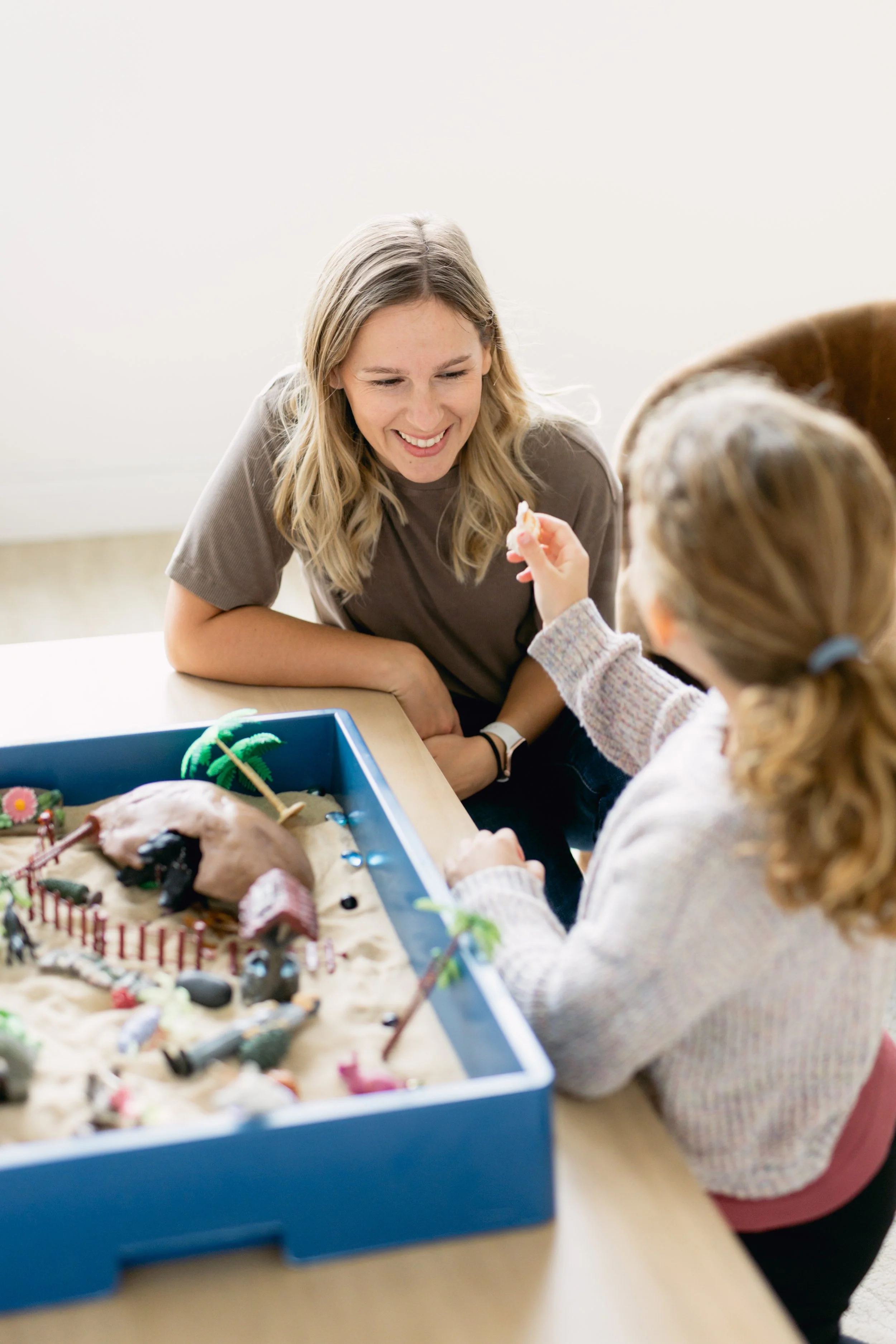
Child-centred play therapy provides a safe, accepting space where children can express themselves naturally through play. The therapist follows the child’s lead, helping them explore feelings safely and practice new coping skills. Here’s how play therapy can gently support common concerns:
Supporting Emotional Regulation
Repeated meltdowns or intense feelings often mean a child’s nervous system is easily overwhelmed. Play therapy gives children opportunities to recognize and express feelings safely while experiencing co-regulation with a caring adult, helping them develop calmer responses over time.
Reducing Anxiety and Worry
Anxious behaviours may show up as avoidance, physical complaints, or persistent fears. Play therapy allows children to symbolically work through worries at their own pace. Feeling understood and safe often reduces anxious responses and builds confidence.
Encouraging Confidence and Engagement
Children who withdraw socially or seem unsure of themselves benefit from consistent acceptance and autonomy in play therapy. This helps strengthen self-trust, decision-making, and a sense of personal capability.
Addressing Regressive Behaviours
Regression is often a child’s way of expressing stress. Play therapy focuses on underlying emotional needs, supporting children to feel safe and internally regulated, which often reduces these behaviours naturally.
Universal Outcomes of Child-Centred Play Therapy
Dr. Brenna Hicks conceptualized four universal outcomes of child-centred play therapy that tend to emerge across a wide range of presenting concerns. In this insightful podcast and article by Dr. Brenna Hicks she walks through each outcome, explaining what it means and how it develops in play therapy:
Expanded Emotional Vocabulary – Children learn to identify and express feelings through play, art, and storytelling, helping them communicate emotions more effectively.
Improved Self-Regulation – Through co-regulated play experiences, children gradually develop skills to manage impulses and emotional responses.
Stronger Self-Esteem and Self-Efficacy – By making choices and leading their play, children build confidence and a sense of competence.
Greater Emotional Resilience – Children practice coping with challenges in a safe environment, fostering long-term resilience.
These outcomes reflect deeper emotional growth that supports healthy development across childhood and beyond.
When to Reach Out for Child Mental Health Support
You don’t need to wait for a crisis. Counselling can be helpful during transitions, periods of stress, or when emotional patterns feel stuck.
If you notice ongoing signs that your child may be struggling, reaching out for support can provide reassurance, guidance, and strategies to help your child thrive.
If you’re wondering whether play therapy might be a helpful step for your child or you’d like to book a session, you’re welcome to contact me to learn more and get started.